Understanding the Classifications of Clean Rooms: What Every Facility Manager Should Know
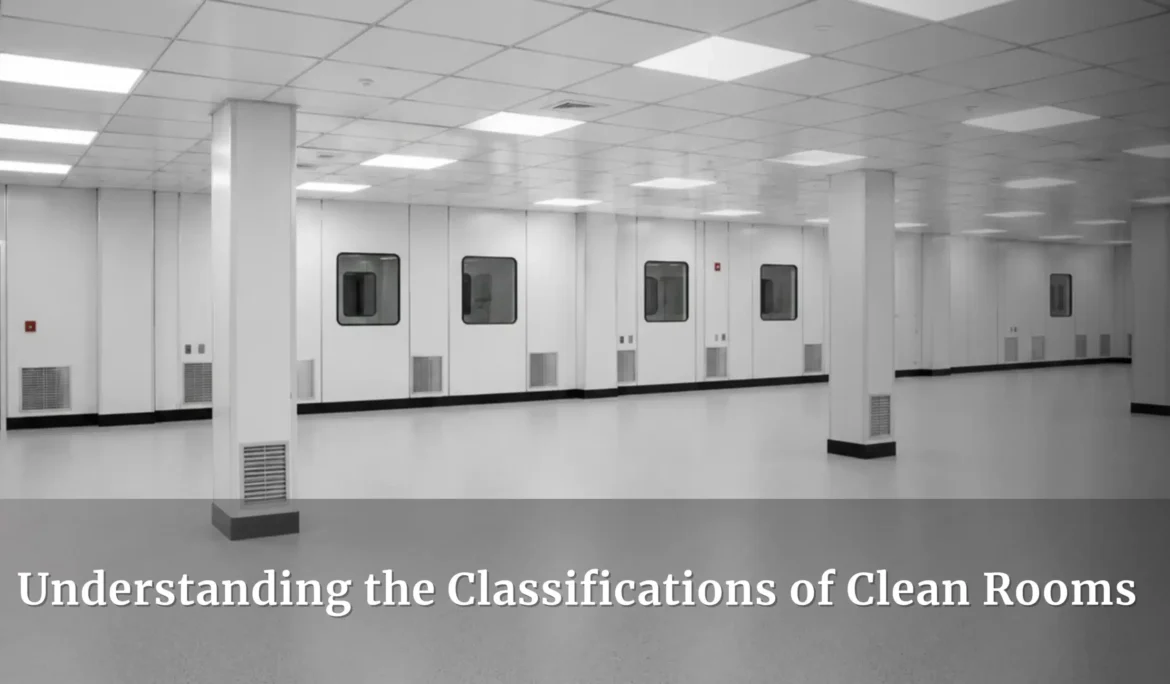
Walk into a pharmaceutical filling line and a semiconductor fab, and on paper, they might carry the same classification. Walk through the door, and you’d struggle to find much else they share. One room is built to keep microbes off a syringe. The other is built to keep a stray particle from wrecking a chip worth more than the room around it.
That’s the thing about the classifications of clean rooms. It sounds like a single number on a spec sheet. In practice, it’s the starting point for almost every decision that follows — airflow design, filtration, gowning, even where you put the doors.
So, before you commission a build or sign off on a supplier’s proposal, it helps to understand what these classifications actually mean, and why the number matters as much as it does.
What Is Cleanroom Technology, and Why Does It Need a Classification System?
Cleanroom technology is the combined set of design, filtration, airflow, and material choices used to control the number of airborne particles in a space. That covers everything from HEPA filtration and pressure differentials to the finish on the wall panels and the gowning protocol at the door.
None of that means much without a way to measure it. That’s what classification does — it turns “clean” from a marketing word into a number you can test, audit, and design against.
Cleanrooms show up across a wide spread of industries: pharmaceutical manufacturing, biotech, medical device and disposables production, cosmetics, food processing, and high-precision manufacturing like semiconductors, aerospace, and defence components. Each of these industries needs a different degree of control, which is exactly why a single “clean” standard was never going to work.
How Are Cleanrooms Classified? The ISO Cleanroom Standards Explained
The most widely used framework comes from the International Organization for Standardization. ISO 14644-1 covers general cleanrooms, classifying them by the number and size of particles allowed per cubic metre of air. ISO 14698 handles a more specific concern: bio-contamination, for cleanrooms where microbial control matters as much as particle count.
Under ISO 14644-1, cleanrooms fall into nine classes, from ISO 1 through ISO 9.
ISO 1 sits at the strict end — only a handful of particles smaller than 0.1 µm are permitted. ISO 9 sits at the other end, allowing a considerably higher particle count at 5 µm and above.
Before ISO 14644-1 became the standard, the industry used the US Federal Standard FED-STD-209E. It was officially cancelled by the General Services Administration in 2001, but you’ll still hear cleanroom classes referred to by their old FED-STD-209E numbers — Class 100, Class 10,000, Class 100,000 — especially in older facility documentation. Here’s how the two map against each other:
| ISO 14644-1 Class | FED-STD-209E Equivalent |
| ISO 3 | Class 1 |
| ISO 4 | Class 10 |
| ISO 5 | Class 100 |
| ISO 6 | Class 1,000 |
| ISO 7 | Class 10,000 |
| ISO 8 | Class 100,000 |
What Is a Class 8 Clean Room, and Where Is It Actually Used?
Of all the ISO classes, the class 8 clean room comes up the most in day-to-day facility planning — and for good reason. It sits at the more relaxed end of the ISO cleanroom standards, but “relaxed” doesn’t mean unimportant.
A class 8 clean room is typically used for gowning rooms, packaging areas, warehousing for sterile components, and support zones that buffer a stricter process area from the outside world. Think of it as the airlock between the outside world and the parts of your facility that can’t afford contamination.
Facilities rarely run on a single classification throughout. A semiconductor fab might need ISO 5 at the wafer level and ISO 8 in the surrounding support areas. A pharmaceutical plant might do the same, with ISO 8 covering everything that isn’t the aseptic fill line itself. Getting this zoning wrong — over-building a support space or under-building a process zone — is one of the more expensive mistakes in cleanroom design.
How Does Sterile Room Classification Work Beyond ISO 14644?
ISO 14644-1 isn’t the only standard shaping sterile room classification. Depending on your industry and region, a few others come into play:
- BS EN ISO 14644-6:2007 — the UK’s adaptation of the ISO framework, used widely across British and European facility documentation.
- EU GMP (Good Manufacturing Practice) — used across the European Union, this classifies pharmaceutical cleanrooms into Grades A through D, based on both particle count and microbial limits.
- USP <800> — developed by the US Pharmacopeial Convention in 2019, this standard focuses on facilities that handle hazardous drugs, adding containment requirements that ISO classification alone doesn’t cover.
If your facility ships or sells into more than one region, it’s worth checking early which of these standards actually apply — retrofitting a room to meet a second standard after the fact is far more disruptive than designing for it up front.
How Does Pharmaceutical Clean Room Classification Differ From General Industrial Use?
Pharmaceutical clean room classification layers extra requirements on top of the base ISO framework. A pharmaceutical facility isn’t just managing particles — it’s managing microbial contamination, cross-contamination between products, and traceability for regulatory audits.
That’s why pharmaceutical cleanrooms are often referenced by both an ISO class and an EU GMP grade. A Grade A zone, for instance — the aseptic core where sterile products are filled — typically corresponds to ISO 5, but comes with additional requirements around unidirectional airflow and continuous monitoring that a general ISO 5 space wouldn’t necessarily need.
In short: for pharma, the ISO number is the floor, not the whole specification.
What Should You Consider Before Choosing a Cleanroom Classification?
Before locking in a classification, a few practical questions are worth answering first.
What is the room actually for? A diagnostics lab and a production facility for critical components have very different needs, even if both call themselves a “cleanroom.” This shapes the size of the room and the equipment you’ll need around it.
How many people will be moving through it? Higher foot traffic — especially frequent entry and exit — usually means investing in additional equipment like pass boxes and air showers, so contamination doesn’t ride in on people rather than the air supply.
What are the environmental conditions you’re designing for? Heat load, required temperature, pressure differentials, and humidity all factor into the mechanical design long before classification becomes a testing exercise.
Get this right, and the classification becomes a specification you can build to — not just a number you’re hoping to hit.
Choosing the right classification is only the first step — building a room that actually holds it is the harder part. FTS Cleanrooms has delivered ISO-certified modular cleanroom systems across pharmaceutical, biotech, semiconductor, and industrial projects in the GCC for over 20 years.
FAQs
Cleanroom technology is the combination of design, filtration, airflow control, and materials used to limit airborne particles and, in some cases, microbial contamination, in a controlled environment. It includes HEPA/ULPA filtration, pressure differentials, modular panel systems, and gowning protocols, all engineered to meet a specific ISO or industry classification.
Cleanroom installation typically starts with defining your required classification and process needs, followed by structural design (modular panels, ceiling grids, flooring), HVAC and filtration system installation, and finally validation testing to confirm the space meets its intended ISO class. Because classification, airflow, and equipment all depend on each other, it’s generally handled by a specialist team rather than a general contractor.
The main difference is particle count. ISO Class 8 permits significantly more particles per cubic metre than ISO Class 7, which corresponds to FED-STD-209E Class 10,000. ISO 8 is typically used for gowning and support areas, while ISO 7 is used for zones closer to the actual production or process step.
Yes, and most facilities do. A single site often includes multiple classification zones — a strict process area alongside more relaxed support and gowning spaces — rather than building the entire facility to the highest standard.
Not necessarily. Depending on your industry, you may also need to meet EU GMP grades, USP <800>, or BS EN ISO 14644-6:2007, on top of the base ISO 14644-1 classification.